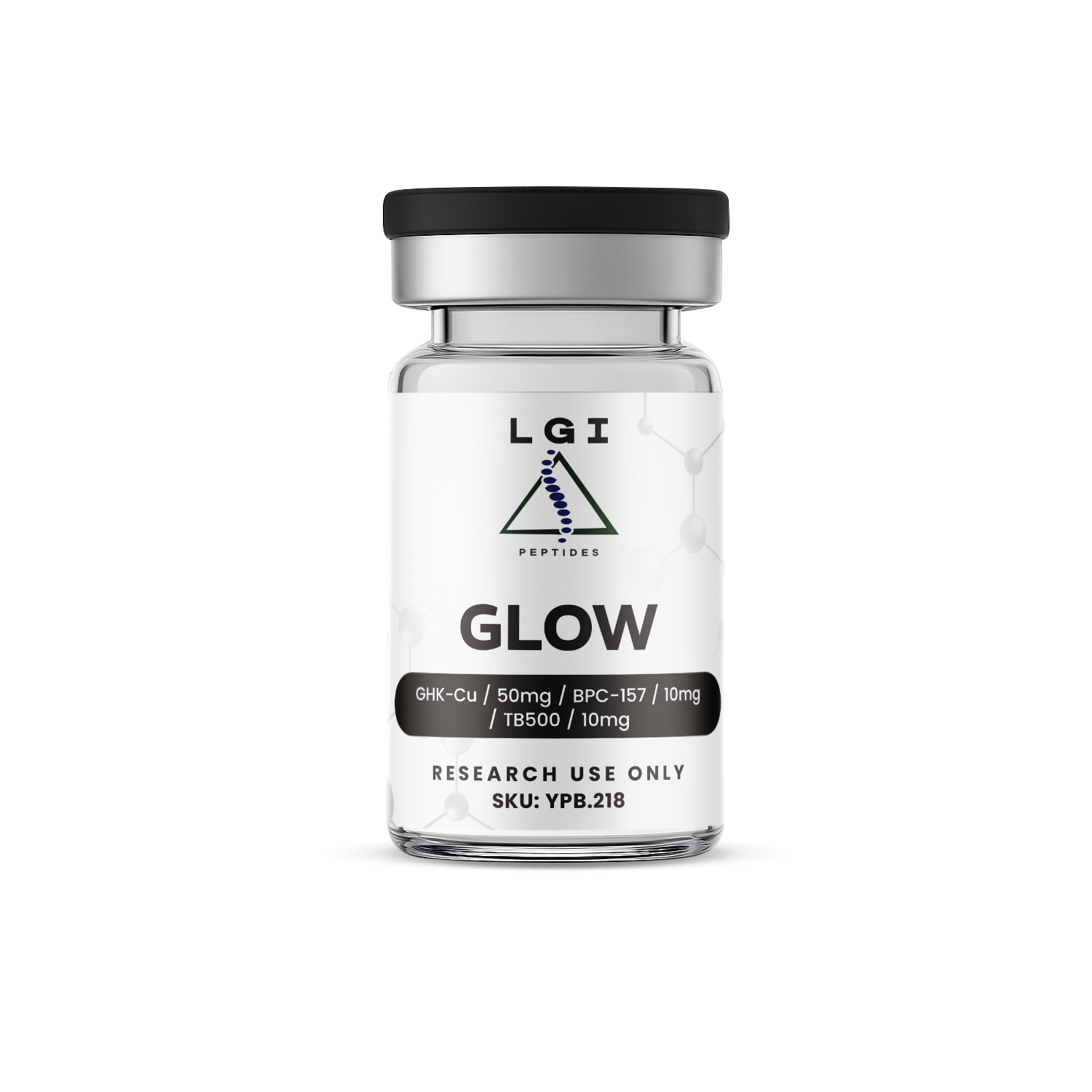
GLOW GHK-Cu (50mg) / BPC-157 (10mg) / TB500 (10mg)
$165.00
GLOW is a triple-peptide research blend combining GHK-Cu (50mg), BPC-157 (10mg), and TB500 (10mg) — compounds studied for their complementary roles in skin regeneration, collagen synthesis, tissue repair, and anti-inflammatory signaling.
3 published certificates
Certificate information is temporarily unavailable.
Description
Purity: >99% (Verified by Third-Party COA) Form: Lyophilized Powder Sequence: L-Val-D-Pro-D-Pro-D-Pro-D-Pro-D-Pro-D-Pro-D-Pro-D-Pro-D-Pro-D-Pro-D-Pro-D-Pro-D-Pro-D-Pro Molecular Formula: C62H98N16O22 Molecular Weight: 1419.5 g/mol
What is BPC-157?
Body Protection Compound-157 (BPC-157) is a synthetic 15-amino-acid peptide sequence derived from a protective protein naturally found in human gastric juice. In clinical and independent research, BPC-157 has demonstrated an extraordinary capacity to accelerate the healing of many different types of tissue, including tendons, ligaments, muscles, and the gastrointestinal tract.
Because it originates in the stomach, BPC-157 is highly stable and resistant to degradation, making it one of the most versatile and heavily researched peptides in the fields of sports medicine, longevity, and biohacking.
Mechanisms of Action: How BPC-157 Accelerates Healing
The profound healing effects of BPC-157 observed in animal models are driven by several distinct biological pathways:
1. Angiogenesis (New Blood Vessel Formation)
The primary mechanism by which BPC-157 accelerates tissue repair is through the upregulation of Vascular Endothelial Growth Factor (VEGF). This stimulates angiogenesis—the creation of new blood vessels. By increasing blood flow to damaged areas, BPC-157 delivers the oxygen and nutrients necessary for rapid cellular repair. This is particularly crucial for tendons and ligaments, which naturally possess poor blood supply and typically heal very slowly.
2. Fibroblast Migration and Collagen Synthesis
BPC-157 accelerates the migration and proliferation of fibroblasts to the site of injury. Fibroblasts are the cells responsible for synthesizing collagen and the extracellular matrix, which form the structural framework of all connective tissues.
3. Nitric Oxide (NO) System Modulation
The peptide interacts with the nitric oxide system, which regulates blood pressure, endothelial function, and the inflammatory response. By modulating this system, BPC-157 helps control inflammation while promoting optimal blood flow during the healing process.
Key Research Applications
Independent researchers and clinical studies have explored BPC-157 for a wide variety of applications:
- Tendon and Ligament Repair: Studies have shown BPC-157 can significantly accelerate the healing of transected Achilles tendons and torn ligaments, often restoring them to near-original strength.
- Muscle Tear Recovery: Research indicates the peptide promotes the healing of crushed or torn muscle tissue while minimizing the formation of restrictive scar tissue.
- Gastrointestinal Health: True to its gastric origins, BPC-157 has been studied extensively for its ability to heal stomach ulcers, reduce intestinal inflammation, and repair the gut lining (often referred to as "leaky gut").
- Bone Healing: Emerging research suggests BPC-157 may accelerate the healing of bone fractures by stimulating osteoblast activity.
The Wolverine Stack: BPC-157 and TB-500
In advanced research protocols, BPC-157 is frequently stacked with Thymosin Beta-4 (TB-500). This combination, often referred to as the "Wolverine Stack," is highly synergistic. While BPC-157 excels at building new blood vessels (angiogenesis) to supply the injury site, TB-500 upregulates actin to rebuild the actual cellular structure of the muscle or tissue.
Storage and Shelf Life
LGI Peptides ships BPC-157 in a lyophilized (freeze-dried) powder form. In this state, the peptide is highly stable.
- Unreconstituted (Powder): Store in the refrigerator (36°F to 46°F) for up to 24 months, or in the freezer (-4°F) for up to 36 months.
- Reconstituted (Liquid): Once reconstituted with bacteriostatic water, the vial must be kept refrigerated and should be used within 28 days to ensure maximum potency and sterility.
Because lyophilized peptides are shelf-stable for years when properly stored, many researchers choose to purchase in bulk to ensure a consistent supply for long-term studies.
Why Choose LGI Peptides?
The efficacy of any research protocol depends entirely on the purity of the compound. Contaminated or under-dosed peptides will yield poor results and introduce unnecessary variables into your research.
LGI Peptides provides only the highest-grade research compounds. Our BPC-157 is synthesized in US-based, FDA-registered facilities and undergoes rigorous third-party testing. Every batch is verified by a Certificate of Analysis (COA) to guarantee >99% purity and the correct molecular mass.
Disclaimer: BPC-157 is sold strictly for laboratory research purposes only. It is not intended for human consumption, diagnostic, therapeutic, or preventative use.
Additional information
| Weight | 0.0625 lbs |
|---|
Certificate of Analysis
Every batch undergoes independent third-party laboratory analysis to verify identity, potency, and safety. Testing includes quantitative assay verification, heavy metals screening, and comprehensive microbial analysis.
View Certificate of AnalysisStorage Instructions
All products from LGI peptides are manufactured using a lyophilization (freeze-drying) process. This method is designed to maintain product integrity and allows vials to remain stable during shipping for approximately 3–4 months.
Once a vial is reconstituted with bacteriostatic water, it should be stored in the refrigerator to help maintain stability. Under these conditions, reconstituted material is generally considered stable for up to 30 days.
Lyophilization is a dehydration technique in which compounds are frozen and then exposed to low pressure. This causes the water in the vial to sublimate directly from solid to gas, leaving behind a stable, crystalline white structure. This powder can be kept at room temperature until reconstitution.
Upon receipt, products should be stored away from heat and light. For short-term use, refrigeration at approximately 4°C (39°F) is suitable. For long-term storage (several months to years), vials may be placed in a freezer at approximately -80°C (-112°F). Freezing is the preferred method for preserving product stability over extended periods.
⚠️ Important Notice:
These products are intended for research use only. Not for human consumption.
Related products
-
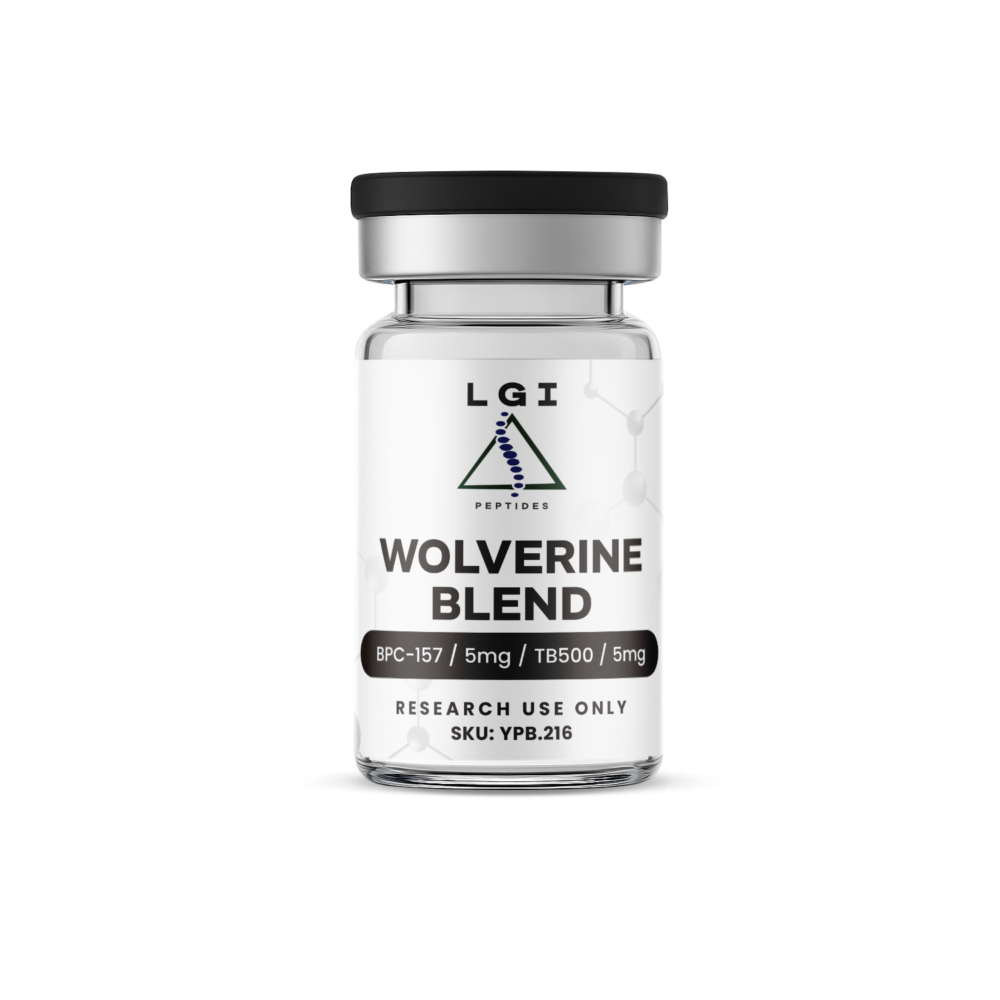
Wolverine Blend – BPC-157 (5mg) / TB500 (5mg) (Globally Sourced)
Price range: $120.00 through $200.00Select options This product has multiple variants. The options may be chosen on the product page -
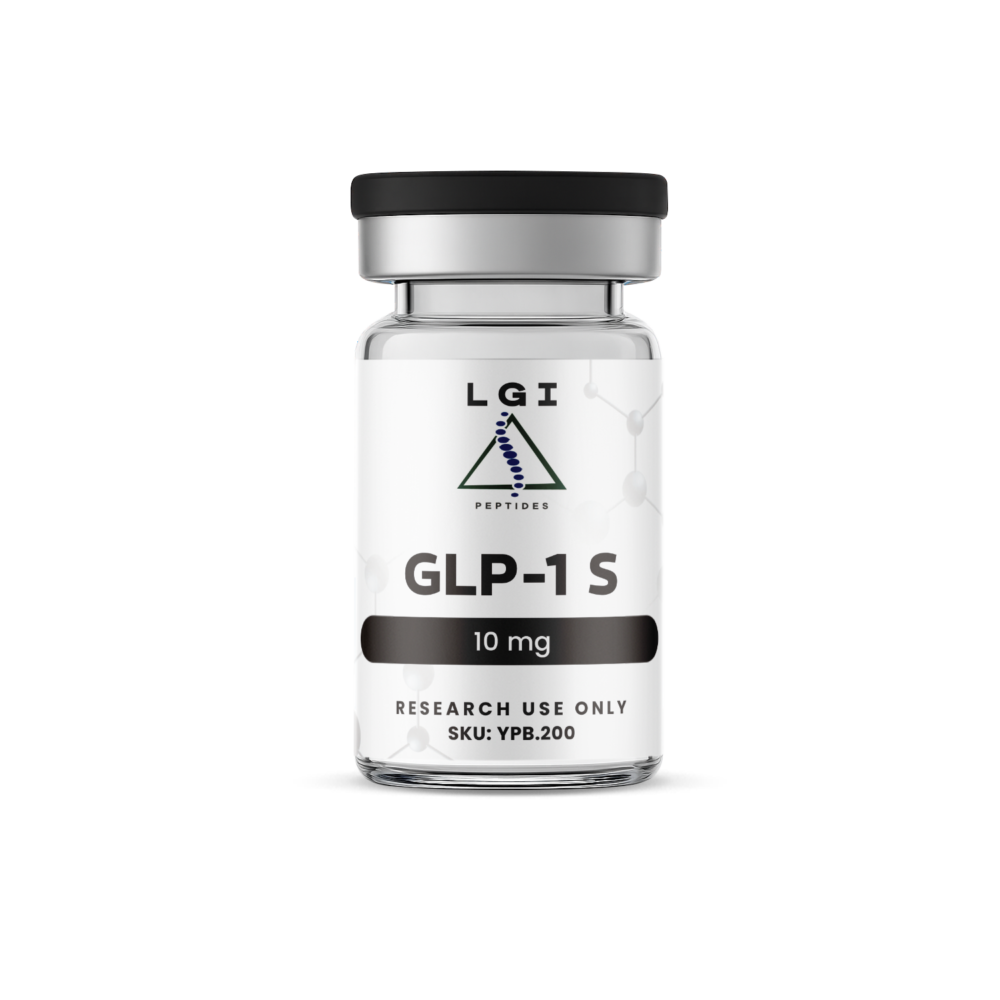
GLP-1 S
Price range: $240.00 through $360.00Select options This product has multiple variants. The options may be chosen on the product page -
Epitalon
Price range: $100.00 through $150.00Select options This product has multiple variants. The options may be chosen on the product page
Reviews
There are no reviews yet.